

A Two-Year Cycle for Local Governing Bodies
Purpose of the Framework
Effective governor monitoring enables each Local Governing Body (LGB) to answer four fundamental questions:
- How well do we know our school?
- How effectively do we support and challenge school leaders?
- How does our work contribute to improved outcomes for pupils and strengthen the Catholic mission of the school?
- What must we do next to improve the effectiveness of governance?
ESCAT defines the role of the LGB as monitoring, supporting and challenging its school. These responsibilities preserve the important local role and autonomy of the LGB while ensuring that governance is aligned with ESCAT’s shared expectations, as set out in the Governor Handbook. Directors are responsible for ensuring that the governor monitoring and evaluation is effective.
What effective governor monitoring should answer
- How well do we know our school?
- How effectively do we support and challenge school leaders?
- How does our work contribute to improved pupil outcomes and strengthen the Catholic mission?
- What must we do next to improve the effectiveness of governance?
ESCAT has produced a tool to help governing bodies monitor, support and challenge their school. The tool also helps governing bodies monitor and evaluate there own effectiveness as well as consider areas for further development.
Comprehensive range of templates
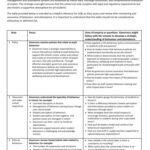 The first set of documents, ‘Area 1’, provides governors with a comprehensive range of information forms containing suggested questions that can be used during governing body meetings and governor visits to school. The purpose of these resources is to support governors in carrying out their strategic role effectively and to provide a consistent framework for discussion and challenge.
The templates are designed across 10 domains to help governors move beyond simply receiving information from school leaders and to encourage meaningful strategic questioning, evaluation and challenge about the work and impact of the school. They provide prompts to help governors explore key areas of school performance, provision and leadership, while enabling them to consider the evidence behind the information presented to them.
The resources are intended to be used flexibly. Governors may use the questions during full governing body meetings, committee discussions, monitoring activities or when undertaking focused visits to school. They are not intended to be used as a checklist or to replace governors’ own judgement. Rather, they provide a point from which governors can develop appropriate questions based on the individual circumstances, priorities and context of their school.
Used effectively, the templates should help governors to understand the school’s strengths and areas for development, test the effectiveness of actions being taken by leaders, and evaluate the impact of those actions on pupils and the wider school community. They should also support governors in demonstrating that they are actively monitoring the strategic priorities of the school and fulfilling their responsibilities for oversight, challenge and accountability.
Strategic review forms
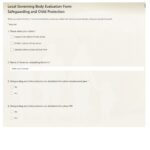 The second set of documents ‘Area 2‘ comprises a series of strategic review forms designed to support governors in monitoring the work of the Local Governing Body (LGB) over a two-year cycle across 10 domains. Each form focuses on one of the 10 key areas of governance and contains a limited number of carefully focused strategic questions.
The purpose of these forms is to encourage governing bodies to reflect on and evaluate their effectiveness in each area, rather than simply providing a record of activity. The questions are intended to prompt discussion and help governors consider whether the LGB has a clear understanding of its responsibilities, whether appropriate challenge has been provided, and whether the governing body has sufficient evidence to demonstrate that it is fulfilling its strategic role.
Each LGB will have complete autonomy over how it organises the two-year cycle. Governing bodies should determine when they wish to consider each of the 10 areas, taking account of their own priorities, school calendar, development needs and the issues that are most relevant to their individual context. There is no expectation that every LGB will consider the areas in the same order or at the same point during the two-year period.
The intention is therefore not to create an additional compliance exercise or a rigid programme of governance activity. Instead, the forms provide a flexible framework that enables LGBs to demonstrate effective oversight in a way that is appropriate to their school.
As part of the Trust’s approach to governance monitoring, the Trust will ask each LGB to indicate when, during the two-year cycle, it intends to consider each of the 10 areas. This will enable the Trust to have an overview of the areas being considered by each governing body and provide appropriate support or challenge where required, while maintaining the autonomy of individual LGBs to determine their own programme of work.
At the end of the two-year cycle, the completed forms should provide a useful record of the governing body’s strategic consideration of each of the 10 areas and help demonstrate how governors have contributed to effective oversight, challenge and accountability across the school.
Finally, although the majority of the review forms are on a two year cycle, the process evaluation form should be completed at the start of each year.
